


A new study from Cornell University highlights how combining solar energy production with carefully managed sheep grazing can support biodiversity. Researchers found that allowing two sheep per hectare to graze beneath solar panels increased the abundance of beneficial insects, including wild bees, honey bees, and lady beetles, by 38% compared with areas maintained through mechanical mowing. The findings, published in Environmental Research Letters, demonstrate how thoughtful land management practices can create environmental benefits alongside renewable electricity generation.
The research also emphasizes the importance of balancing agricultural activities with ecological conservation. Over three years, scientists examined different grazing densities to understand their effects on vegetation and insect populations. The results suggest that properly managed solar grazing can help maintain vegetation while creating more favorable conditions for beneficial insects, providing valuable insights for farmers and solar developers. As agrivoltaics continues to evolve, studies like this highlight opportunities to integrate clean energy, agricultural productivity, and biodiversity conservation within the same landscape.
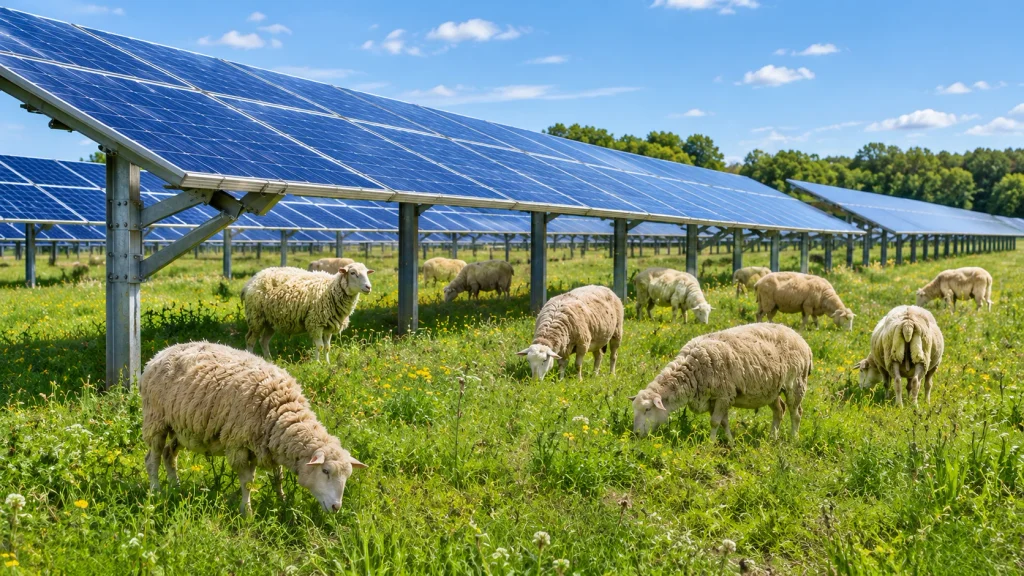
Source: Cornell University — Sheep Grazing in Solar Fields Offers Farmers Economic, Ecological Gains